
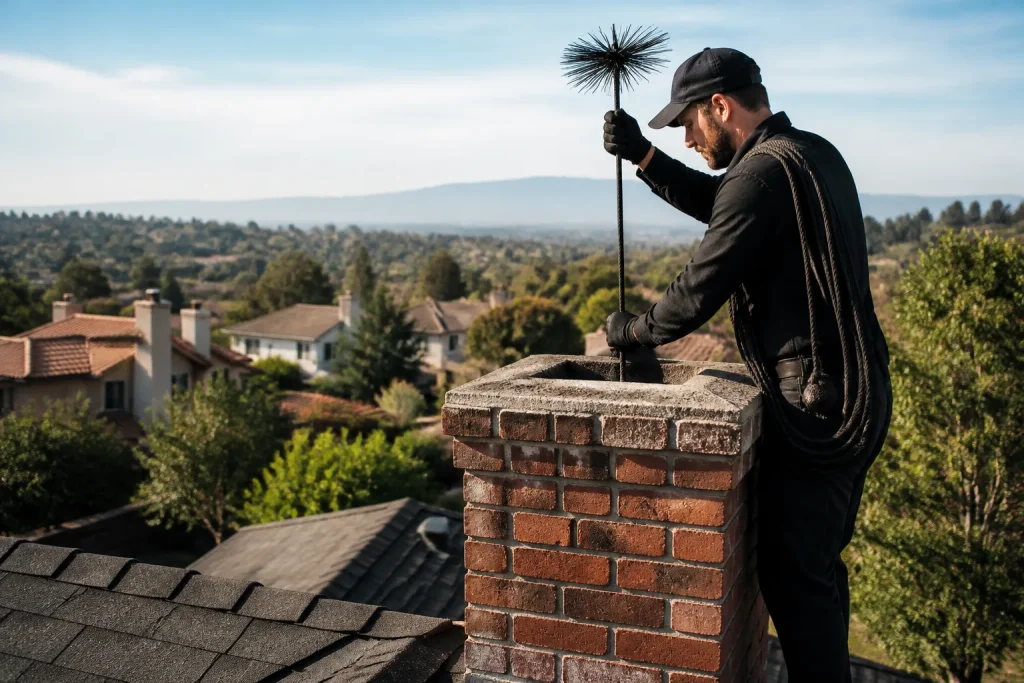
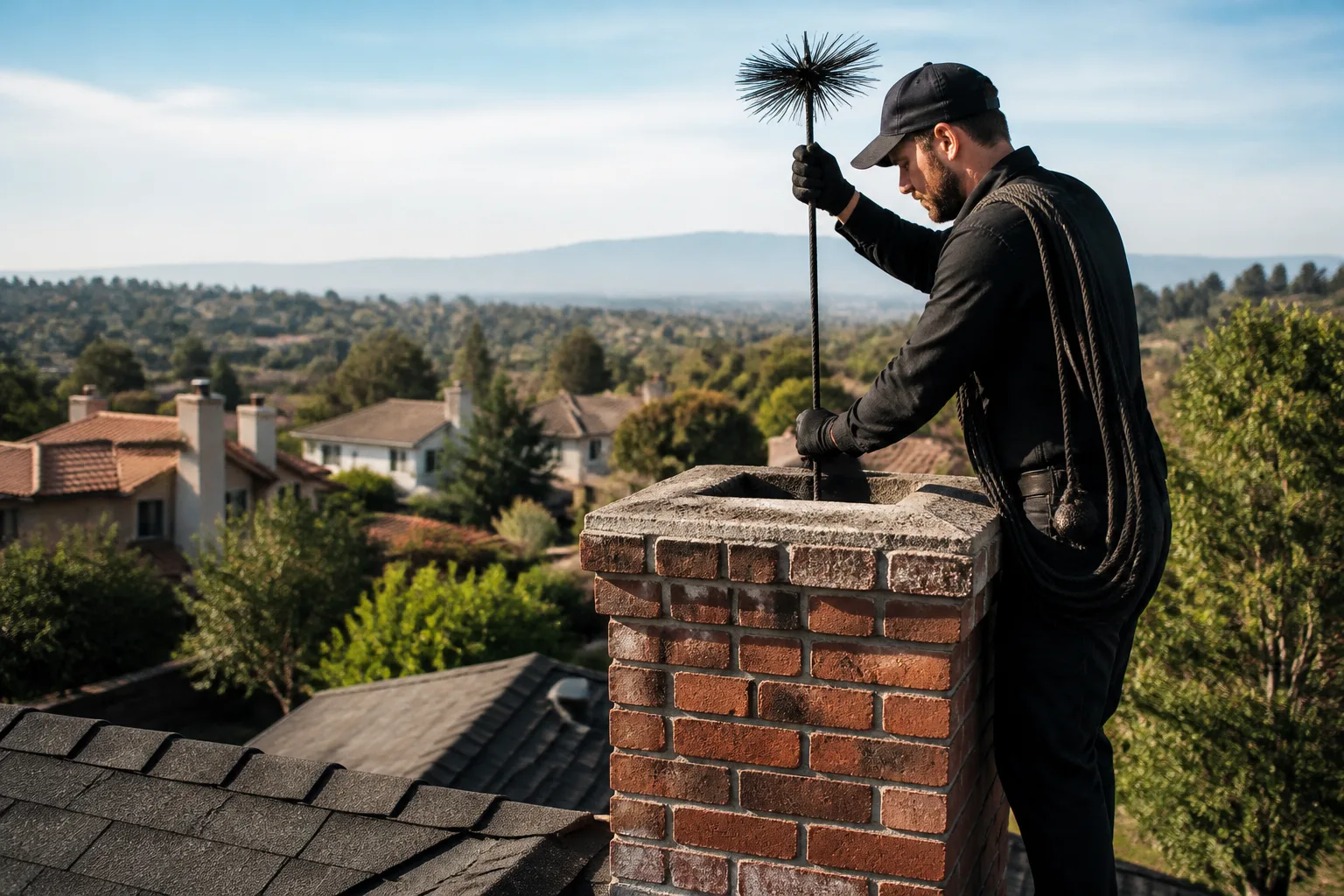
How to Choose the Right Chimney Cleaning Company in Lake Forest
Choosing the right chimney company comes down to three things: verify the certifications they voluntarily earned, confirm they use professional-grade materials rather than big-box substitutes, and ask enough technical questions to know they can actually inspect what they clean. California doesn’t require a license to sweep chimneys, so the burden of vetting falls entirely on you. If you’d rather skip the research and talk to someone directly, call (833) 589-9146 for a free estimate.
Here’s the part nobody tells you when you start Googling “best chimney cleaning company Lake Forest CA”: the results you see are ranked by SEO skill, not technical competence. A company with a great website and hundreds of five-star reviews might have never opened a chimney camera in its existence. Meanwhile, a genuinely qualified specialist might rank below them because they spend their time in flues instead of on Instagram.
Why California’s licensing rules make this harder than it should be
California requires contractors to hold a license for most construction trades. Roofing, electrical, plumbing, HVAC: all licensed. Chimney sweeping is not one of them. There is no state chimney-sweep license, no required apprenticeship, no mandatory exam. Anyone can print business cards, buy a brush set, and call themselves a chimney professional in Lake Forest.
This creates a weird dynamic where a licensed general contractor who occasionally sweeps chimneys looks more legitimate on paper than a dedicated chimney specialist who holds voluntary certifications. The general contractor’s license number appears on their website and in state databases, which feels reassuring. But a general contractor’s license says nothing about chimney-specific knowledge. It certifies that they passed business law and trade exams for their primary trade, not that they understand draft dynamics, flue tile deterioration, or the combustion clearances required for a safe wood-burning system.
That’s why voluntary certifications matter so much in this trade. Nobody forced the company to earn them. They paid for training, passed exams, and maintain continuing education because the credential carries weight. A company that pursues certification is telling you something about how seriously they take the work.
CSIA vs. NFI: what each certification actually covers
The two credentials you’ll see mentioned most often in the chimney industry are CSIA and NFI. They are not the same thing, and neither one alone tells the whole story.
CSIA (Chimney Safety Institute of America) focuses specifically on chimneys, fireplaces, and venting systems. The CSIA Certified Chimney Sweep credential covers inspection techniques, fire codes, clearances, draft, and combustion safety. To earn it, a person must pass a proctored exam and retest periodically to maintain the credential. You can verify a CSIA certification on the CSIA website by searching the company or technician’s name. If a company claims CSIA certification and you can’t find them in that database, walk away.
NFI (National Fireplace Institute) certifies specialists in gas, wood, and pellet systems. An NFI Woodburning Specialist has demonstrated knowledge of wood stove and fireplace installation, venting, and clearances. An NFI Gas Specialist knows gas log sets, inserts, and direct-vent systems. Some technicians hold NFI certifications only for gas appliances, which matters if you have a wood-burning fireplace they’ll be evaluating.
Here’s the practical takeaway: a company with a CSIA-certified sweep and an NFI-certified technician covers both the chimney structure and the appliance inside it. One without either might still do fine work, but you’re taking their word for it. Verify every credential they list. It takes five minutes on a certifying body’s website, and it’s the single highest-value vetting step you can take.
Generalist vs. specialist: why it matters more than you’d think
A company that offers gutter cleaning, window washing, pressure washing, and “chimney services” on the same menu is a generalist. There’s nothing wrong with that business model, but it’s structurally different from a chimney specialist. A generalist’s chimney work is one line item among many. They show up, run a brush through the flue, collect a check, and move on to the next gutter job. If the camera reveals a cracked flue tile or a deteriorating liner, they don’t have the equipment or materials to address it. That’s not a knock on them; it’s just what the business is built for.
A dedicated chimney sweep company does this work all day, every day. That repetition means they’ve seen the inside of hundreds of flues in Orange County homes, which gives them a baseline for what “normal” looks like versus what needs attention. It also means the repair capability lives in-house. When a sweep finds a problem, the same company quotes the fix, stocks the materials, and completes the work. You don’t get a referral to someone else and a second round of scheduling.
The materials tell the difference too. Specialist companies install and work with professional-grade liner systems like DuraFlex and resurfacing products like HeatShield, the same materials certified chimney contractors use nationwide. A generalist who does gutters and windows isn’t stocking DuraFlex on the truck. They’re not certified in HeatShield application. When a repair is needed, their scope ends and you’re back to square one.
Five questions to ask before you book anything
These questions separate companies that clean chimneys from companies that understand them. Ask all five. A qualified specialist answers each one without hesitation.
- “Do you run a camera up the flue during the sweep?” Brushing removes creosote, but it doesn’t tell you anything about the condition of the flue behind it. A camera inspection documents cracked tiles, gaps in mortar joints, deteriorating liner sections, and blockages. If a company doesn’t offer camera inspection, skip them. It’s the difference between cleaning and actually knowing.
- “What level inspection do you perform?” There are three levels of chimney inspection defined by industry standards. Level 1 is a visual check of accessible areas. Level 2 includes camera work and is the standard for a home purchase or after any change to the system. Level 3 involves opening up walls or masonry and is rare. Most homeowners need a Level 2 at minimum. If the company can’t explain the levels, they haven’t been trained to industry standards.
- “What product lines do you use for repairs?” The answer reveals whether they’re buying real contractor materials or whatever the local hardware store has on the shelf. Look for names like DuraFlex for chimney relining and HeatShield for flue resurfacing. In our work, we source from industry supply lines like Copperfield, Olympia Chimney, and Gelco because these are the products built for chimney systems, not improvised substitutes.
- “What does your liability insurance cover?” If a sweep damages your roof, your hearth, or your chimney cap, who pays? A legitimate company carries liability insurance that covers property damage. Ask for proof. If they get evasive, that’s an answer.
- “What happens when you find a problem?” A specialist says, “We tell you, show you the camera footage, and quote the repair.” A generalist says, “We’ll let you know and you can find someone.” One of those answers costs you a second phone call and a second round of vetting.
How to read Google reviews like a chimney professional
Most people read reviews for stars. Stars tell you whether the technician was pleasant and arrived on time. They don’t tell you whether the work was technically sound. A friendly sweep who shows up early and leaves a spotless hearth can get five stars while completely missing a deteriorating flue. You need to read for chimney-specific details.
Look for reviews that mention specific findings, not just feelings. A review that says “they showed me camera footage of a cracked flue tile and explained my options” tells you the company documents their work. A review that says “nice guys, quick and tidy” tells you almost nothing. Search review text for words like “camera,” “report,” “photos,” “liner,” and “explained.” Those are the markers of technical communication.
Also pay attention to how a company responds to negative reviews. If someone left two stars and the owner responds with a detailed explanation of what happened, that’s a company that stands behind its work. If every response is a generic “thank you for your feedback,” that’s a template, not a person.
Lake Forest has a lot of homes built in the 1970s and 1980s, which are now at the age where original chimney components are reaching end of life. Reviews that mention liner replacement, flue resurfacing, or repair work in those older neighborhoods suggest the company actually diagnoses problems rather than just pushing a brush through and leaving.
What a legitimate post-service report should contain
When the sweep finishes, you should receive something you can hold onto. A real report is documentation of what was cleaned, what was inspected, and what was found. It’s not a verbal summary delivered over the roar of a vacuum.
A legitimate report includes: photos from the camera inspection showing the flue before and after cleaning, the inspection level performed, a list of findings (creosote level, flue condition, damper function, cap status), and a clear distinction between what needs attention now versus what can wait. The report should also note the products used, whether a basic brush sweep or something more involved like a resurfacing product.
If a company doesn’t produce a written or digital report with photos, they haven’t actually inspected anything. They’ve just cleaned. There’s a difference between the two, and the difference is whether you find out about a $700 repair today or a $7,000 rebuild in three years.
This documentation also matters for insurance purposes. If you ever file a claim related to a chimney fire or smoke damage, your insurance company will want evidence that the system was professionally maintained. A photo report is that evidence. A receipt with no documentation is not.
When to call a pro instead of handling it yourself
We understand the appeal of a DIY chimney sweep. The brushes are sold at hardware stores, the basic concept looks simple, and the cost difference feels significant. But here’s the reality: brushing the accessible portion of the flue is the easiest 10% of the job. The other 90% is knowing what you’re looking at, documenting the system’s condition, and understanding whether what’s there is safe to keep using.
A DIY sweep cannot tell you whether the flue tiles are cracked. It cannot document creosote buildup in hard-to-reach offsets. It cannot assess whether that chimney was built to current clearance standards. And if you skip the inspection while doing the cleaning, you might be removing the evidence of a problem while leaving the problem itself entirely in place.
Same goes for your dryer vent. Lint accumulation in a dryer vent is a fire hazard that builds silently, and if you’re not cleaning it with the right equipment, you’re not reaching the entire run. We use Famco ventilation products for dryer vent cleaning because they’re purpose-built for duct work, not improvised hardware. The stakes are the same as a chimney: a plugged vent doesn’t signal itself until something bad happens.
The Bottom Line
Choosing a chimney company in Lake Forest comes down to credentials, materials, and documentation. Verify CSIA and NFI certifications on the issuing body’s websites. Ask about camera equipment, inspection levels, and repair product lines. Read reviews for evidence of technical communication, not just friendliness. Require a written report with photos before you pay.
If you’re in Lake Forest and want to skip the vetting process, Chimney Sweep Lake Forest handles the full scope: sweeping, inspection, repair, and dryer vent cleaning under one provider. We work with DuraFlex and HeatShield for relining and resurfacing, and source from Copperfield, Olympia Chimney, and Gelco. Free estimates. Call (833) 589-9146.
Frequently Asked Questions
Ask for the certification number and verify it on the certifying body’s website. CSIA maintains a searchable database of certified sweeps, and NFI lists certified specialists by name and specialty. If the company hesitates or the name doesn’t appear, they’re not certified. A claim without a verifiable credential is just a claim.
A chimney specialist is the better choice for chimney work. General contractors are broad by design; they do many trades adequately but rarely maintain chimney-specific equipment, materials, or training. A specialist who only handles chimneys and dryer vents sees more flues in a month than a general contractor sees in a year, and has the repair materials and certifications to follow through when a problem is found.
A good company documents it with camera footage, explains what it means, and gives you a written quote if they handle repairs. A company that can’t do this just tells you to find someone else. The benefit of a full-service specialist is that one phone call starts and ends the job. Related services in Lake Forest include chimney relining with DuraFlex and flue resurfacing with HeatShield, both handled in-house.
The National Fire Protection Association recommends a chimney inspection at least once a year, and cleaning whenever creosote accumulation reaches 1/8 inch or more. In Lake Forest, where mild winters mean many fireplaces go unused for months at a time, the risk isn’t heavy creosote from heavy burning; it’s deterioration going unnoticed because the fireplace sits dormant. Schedule an annual sweep before burning season starts. Call (833) 589-9146 for an exact quote. We answer 24/7. Fast dispatch from 7am to 7pm, Sunday through Friday.
Written by the team at Chimney Sweep Lake Forest, serving Lake Forest since 2015.
Need Chimney Cleaning Help?
Call Chimney Sweep Lake Forest - licensed & insured, with free written estimates in Lake Forest.
(833) 589-9146